Sunday, 15 April 2012

East Coast Weekend


Cold, rain and strong winds. Seems to be typical weather on the Yorkshire coast at the moment. Dodging the rain, I visited Bempton Cliffs on Saturday and went for a walk along a deserted Cowden Beach on Sunday morning.

I've visited Bempton quite a few times now and there's usually a bit of a breeze but today it was blowing  a gale. The sky/sea were a shade of slate grey which put me off staying around for very long to take photos, but having looked at the ones that I did get I actually quite like the monochrome background.

I didn't even bother trying to capture anything smaller than a Gannet as the wind meant they were flying far too quickly for my birds-in-flight technique!


                                                                                   Juvenile?

I think this one shows the effect the strong wind was having on the Gannets.


I quite like the background on this shot...

Maybe this one trying to reduce the lift that it's wings are providing in an effort to slow down and land on the cliff face?


------------------------------------------------------------------------------------------------------------

The weather was so poor on Sunday morning that I left the camera in the car and went for a walk along Cowden beach instead of looking for birdlife. It wasn't long before I came across this young(?)  Grey Seal. It was laid motionless with it's eyes closed as I approached so initially I thought it was dead. Only for it to spring back to life as I got within a few feet.

I'm not sure if it was well though. It made a few noises towards me but didn't attempt to move away. I thought about using my mobile to contact someone for advice but I didn't have a signal and the tide was moving in fast. So it would almost certainly be gone by the time they arrived.

I only had my mobile phone on me so the picture is of poor quality.


 I did take a video before moving away and watching from a distance for a while but it didn't move from this spot.


Thursday, 12 April 2012

River Calder Wagtails


At least one pair of Grey Wagtails can be regularly seen feeding at the bottom of the weir, near Island View in Dewsbury. Getting close enough to photograph them meant a struggle through the undergrowth before setting up my tripod on the water's edge. Now all I had to do was wait for them to turn up!

My luck was in though and no sooner had sat down than one of a pair appeared right in front of me. It was  further away than I would have liked but I can't really complain.


It was feeding on the small creatures which were hidden in the nooks and crannies of the rock and was soon joined by its partner. Not that I've any idea how to tell male from female.


The second one to arrive had to be content with the more precarious side of the rock.


On the way back I saw a couple of Reed Buntings - or are they Sparrows?


This shot of a nesting Dunnock demonstrates the value of a good, sturdy tripod. It was taken with a 500mm lens + 1.4x tele-converter at a mere 1/80th second - (I think the general rule-of-thumb for hand-held shots is that you should have a shutter speed of at least the focal length of the lens, which would mean around 1/700th sec in this case). The tripod is a pain to carry around but there's no way I could have captured anything other than a blur without it.


Wednesday, 21 March 2012

Whooper Swans


Hardly a rarity, but a first for me in this neck of the woods. Nine of these magnificent birds decided to stop off at Pebley Reservoir, which is near to where I work in Barlborough, North Derbyshire. The only other Whoopers I've ever come across were at Wigtown in South-West Scotland.

According to the RSPB website they should be on their way back to Iceland for the summer after wintering somewhere in East Anglia (probably). Or maybe they have been to the European mainland - dunno if they migrate that far though?


Sunday, 11 March 2012

A bit too early for the migrants...

I was hoping that I might get lucky this morning and be greeted with the familiar call of a recently arrived Chiffchaff when I made an early morning visit to Bridge Royd Wood at Bretton Lakes. Unfortunately they haven't arrived just yet but there was still plenty going on in the woods and on the lake. Only the Herons were missing from their spot above the island on the top lake, where their heronry is usually in full-swing by now. I suppose its too early to tell if they have become a victim of the recent vandalism (restoration if you listen to the people that run the place) that has seen substantial parts of the reserve ripped-up, bulldozed or removed.

I still haven't seen or heard a Kingfisher this year either. I hope they make a return soon.

Here is a selection of what I did see.

Top-to-bottom - Great Spotted Woodpecker, Treecreeper, Male/female Goosanders, Tufted Duck, Bit of aggro from the male Goosanders, Female Goosander close-up and one half of a pair of Buzzards that were circling high above Litherop Woods as I returned to my car.


Note the serrated bill. A friend of my wife's once said that these birds have teeth!!! Even I know that the only duck with a set of gnashers is called Donald!

PS - just checked - even Donald doesn't have teeth!


Tuesday, 27 December 2011

Back to Bretton


Depending on your point of view, Bretton Lakes Nature Reserve has recently been either revamped or vandalised. Today was my first visit since the not-so-grand re-opening and the first thing to hit me was the exponential rise in visitor numbers. I'm far from being an expert but I can't see how this can have a positive effect? I suppose only time will tell and we will be able to make more of a judgement when the next breeding season starts?

The sun was already sinking below the horizon when I arrived so, birdfeed at the ready, I made straight for the hide. All the usual suspects were around and were more than happy for me to sit close to their feeding stations to get some pics.

Photographically, the bad light meant high ISO settings and low shutter speeds hence there was plenty of noise and motion blur on the results.

After much post-processing here is the best of what I captured...


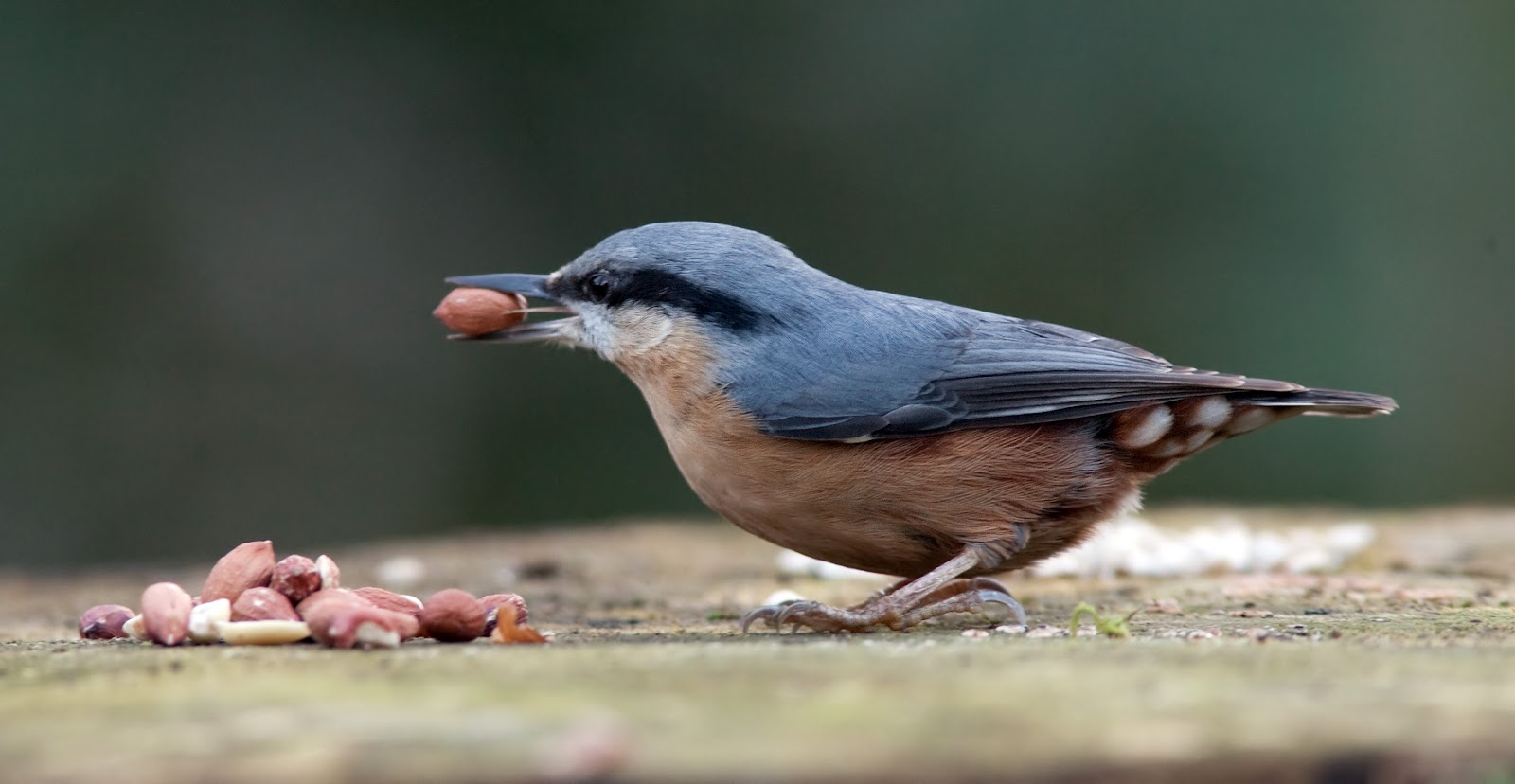
(Wren, Coal Tit, Great Tit, Nuthatch, Blue Tit and Chaffinch)


Wednesday, 9 November 2011

Lanzarote


I've been to Lazarote a few times in the past but that was before I got into bird photography so I was looking forward to this trip.

The first time I had a drive around made me realise that getting close to the subject wasn't going to be easy, mainly due to the lack of trees and other natural cover. So the car was going to have to make do as a hide. Thankfully I brought a beanbag with me so at least I could get a fairly stable camera window rest.

My first outing produced a grand total of nothing but after that things slowly improved.

By far the most common and friendly bird was the Berthelot's Pipit. These were around practically everywhere and were happy to come really close to me.


I didn't want to leave the island without seeing a Houbara Bustard. I'd no idea what they looked like or how big they were so when I saw this bird creeping around in the undergrowth I thought I'd found my target, only for it to turn out to be a Stone Curlew.


The next time I came to this area the Houbara Bustard did turn up.


It might have been fortunate for this fella that I was around as waiting on the rim of the valley in which I was sat in were this pair and their dogs.

They were to my right. To my left there had been some guys on loud trail bikes which resulted in two Bustards being driven (intentionally?) towards the hunters. I was roughly in the middle and both the birds doubled back when they saw me. I like to think that my presence might have spoilt the hunter's fun!


A few of the other photos that I managed to get before returning home...

 Cattle Eagret
 
Sardinian Warbler Male Spectacled Warbler

Common Whitethroat Female Spectacled Warbler

Thanks to Roy for pointing out my ID mistakes. I even checked the female on WAB and still got it wrong!


 Great Grey Shrike


Trumpeter Finch


Eleonora's Falcon Common Kestrel

 
Hoopoe